


Wimba Wound Care
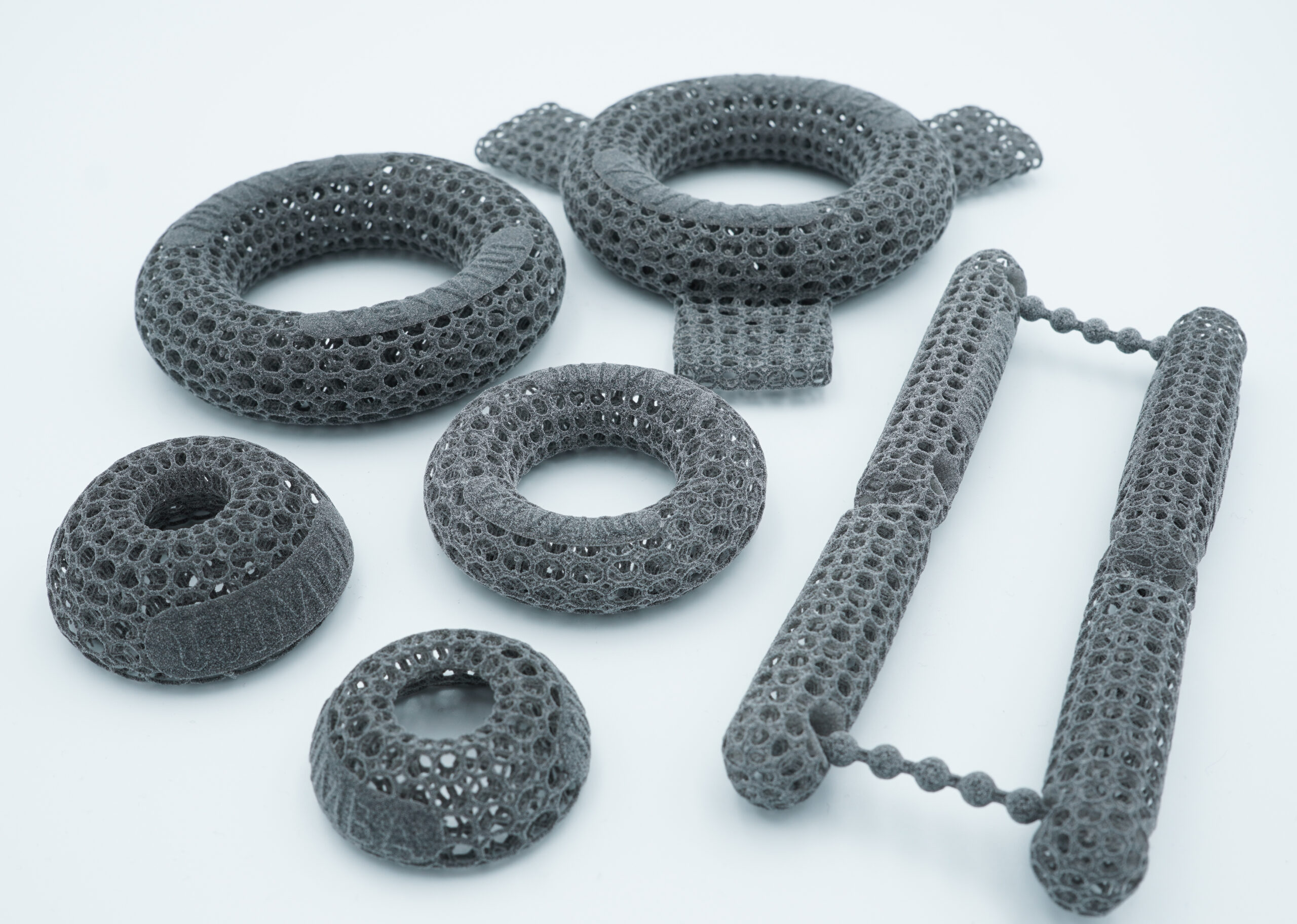
Introducing the Wimba Wound Care range – pressure-offloading spacers for veterinary wound care
Features:
- Reusable – clean and reuse across multiple patients/visits, not single-use
- Washable / easy to clean – mild soap and water, air dry, no special handling needed in clinic
- Water-resistant construction – tolerates normal cleaning and clinic conditions without degrading
- Lightweight, breathable lattice design – reduces heat build-up and allows airflow to the site
- Autoclave note as a limitation to flag honestly (no steam/autoclave – low-temp gas sterilisation only if needed) so it doesn’t look like a gap you’re hiding
Quick Reference Guide
| Clinical Scenario | Potential Product(s) | Intended Function |
|---|---|---|
| Paw pad laceration | Standard Donut | Protect wound from ground contact during ambulation |
| Paw pad skin lesion | Standard Dome | Shield wound from impact and friction during walking |
| Elbow pressure sores | Large Donut Wings Gradient Dome |
Offload pressure; protect from friction and self-trauma |
| Elbow calluses | Large Donut Wings |
Protect site between clinical visits; reduce mechanical disruption |
| Bandage sore – active | Standard Dome | Eliminate contact between bandage and wound; reduce friction |
| Bandage sore – prevention | Dome Gradient Dome Donut |
Prevent skin breakdown at at-risk pressure |
| Recumbent patient – ICU / in patient | Large Donut Wings |
Redistribute pressure from bony prominences during recumbency |
| Linear wound / suture line | Standard Sticks Flat Rectangle |
Protect linear wound or incision from mechanical stress |
| Longer incision / larger post-surgical area | Large Flat Rectangle Flat Rectangle |
Protect incision line from mechanical stress with a low-profile frame. |
Three-Step Application
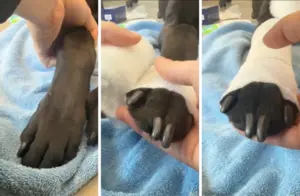
- 1
Prepare the Wound Site
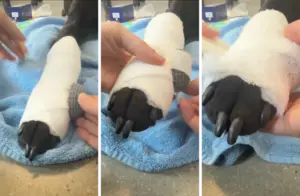
- 2
Position the Product
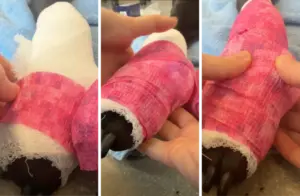
- 3
Secure with Bandage
Cleaning & Usage
- Clean with lukewarm water and mild, pH-neutral soap, antiseptic/antimicrobial or virucidal disinfectants
- Rinse thoroughly
- Use a soft brush to clean lattice structure if needed
- Air dry completely before use
- Operating Temperature: Use and store within 5oC (41oF) – 40oC (104oF)
DO NOT:
- Autoclave or use any steam-based sterilisation
- Use on multiple patients, or exceed the safe temperature range
- Reuse a deformed, soiled or fatigued spacer
Real clinical cases using WIMBA Wound Care
See how 3D-printed spacers help protect wounds, reduce pressure, and support recovery in everyday veterinary cases.
Nelson
Nelson, a 12.5-year-old Labrador treated for a chronic elbow wound. What initially appeared as redness and a superficial abrasion rapidly progressed into an open wound. Despite early local wound care, bandaging, and suturing, the lesion remained difficult to manage because of its location over the elbow and the repeated pressure placed on the area.
Bruno
Bruno, a 9-year-old Alaskan Malamute, was treated for bilateral elbow pressure sores caused by repeated pressure and mechanical irritation during rest. Both elbows were affected, with one additionally complicated by a deep fistula with purulent discharge. WIMBA Wound Care was incorporated into his wound management plan to support pressure offloading, protect the primary dressing, and help maintain more stable conditions between dressing changes.